

Last updated: 24.03.2026 | Reading time: approx. 5 Min.
Table of Contents
Overview of Key Points:
- Causes: Vertebral fractures are usually caused by falls, sports injuries or road traffic accidents. Osteoporosis, tumours or inflammatory conditions can also weaken the vertebrae to such an extent that even minor trauma can lead to a fracture.
- Diagnosis and treatment: Diagnosis is based on a physical examination, X-rays, or CT scans, as well as an MRI if nerve involvement is suspected. Based on your symptoms and test results, our spine specialist and neurosurgeon, Dr. Julia Reinhart, at SPORTambulatorium Vienna will develop a personalized treatment plan.
- Conservative treatment: Stable and uncomplicated vertebral fractures are usually treated without surgery. Typical treatments include pain management, rest, orthoses (braces), physiotherapy, and complementary therapies such as injections, neural therapy, mesotherapy or acupuncture for pain relief.
- Surgical treatment: Unstable or displaced vertebral fractures require surgery to protect the spinal cord and nerves. Depending on the findings, microsurgical decompression, minimally invasive procedures such as kyphoplasty/vertebroplasty, or stabilisation measures such as spinal fusion may be used.
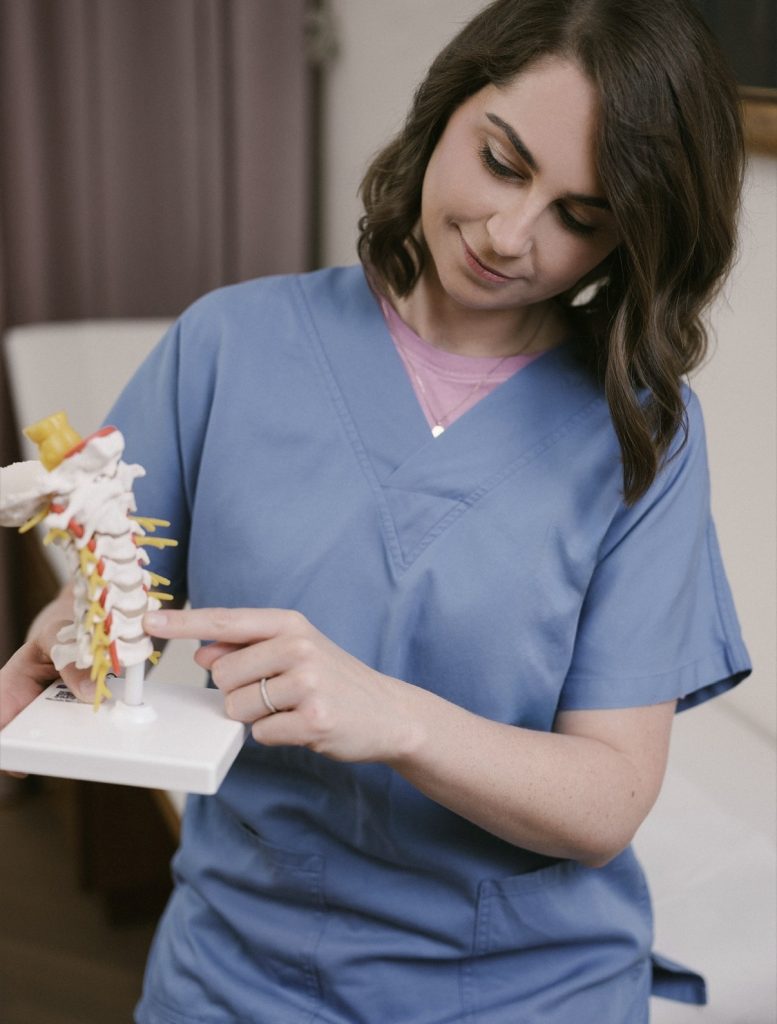
At the SPORTambulatorium Wien , we combine precise diagnostics, conservative treatment methods, and—if necessary—minimally invasive surgical procedures to provide long-lasting relief from your pain. Treatment is provided by our interdisciplinary team and by our spine specialist Dr Julia Reinhart, a board-certified neurosurgeon.
What is a vertebral fracture?
A vertebral fracture is a break or crack in one of the vertebral bodies. This type of fracture can occur in any part of the spine, but is most commonly found in the thoracic and lumbar spine.
Causes of a vertebral fracture
Vertebral fractures can be caused by various factors and events:
Traumatic injuries:
- Falls: A heavy fall onto the back or bottom can result in a fracture.
- Sports injuries: Contact sports or high-speed sports can lead to vertebral fractures.
- Road traffic accidents: The impact of a car crash can exert considerable force on the spine.
Osteoporosis:
- In osteoporosis, bone density decreases, making the vertebrae more susceptible to fractures; even minor trauma or everyday activities such as lifting or bending can result in a fracture of one or more vertebral bodies
Pathological fractures:
- Bone tumors: Metastases or primary bone tumors can weaken the vertebral bones and lead to fractures.
- Infections: Infections such as osteomyelitis can weaken the bone and cause a fracture.
Other degenerative conditions:
- Arthritis: evere degenerative changes can compromise the structure of the vertebrae and increase the risk of fractures.
Symptoms of a Vertebral Fracture (Spinal Fracture)
- Severe back pain: Acute, sudden pain at the site of the fracture.
- Limited mobility: Difficulty standing, sitting, or walking.
- Nerve compression: Numbness, tingling, or weakness in the arms or legs if the fracture puts pressure on the nerves.
- Postural changesVisible deformity such as a hunched back (kyphosis) in osteoporosis-related fractures.
Treatment options: What to do in case of a vertebral fracture?
The treatment of a vertebral fracture depends on the cause, location, and severity of the fracture.
Conservative treatment of vertebral fractures:
In most cases, surgery is not necessary for mild vertebral contusions, soft tissue injuries, or stable fractures. Treatment is conservative and typically includes the following measures:
- Pain medication: To relieve acute pain.
- Immobilization: Use of orthoses or corsets to stabilize the spine.
- Physical therapy: To improve mobility and strengthen the back muscles.
- Injections/ neural therapy/ mesotherapy/ acupuncture: These treatment options contribute significantly to pain relief and faster recovery.
Surgical Treatment of Vertebral Fractures:
In cases of complicated vertebral fractures—such as when bone fragments are displaced or protrude into the spinal canal—surgery is necessary. Only through surgical stabilization can further damage to the spinal cord be prevented. The primary goal is to realign the spine correctly, stabilize it, and reduce pressure on the affected nerves. This can alleviate pain and minimize the risk of neurological deficits.
Modern microsurgical techniques allow for extremely precise work in the area of the vertebral bodies and nerve structures. Displaced bone fragments can be selectively removed or repositioned so that the constricted nerve pathways are freed up again.
- Kyphoplasty or vertebroplasty: Minimally invasive procedures to stabilize the vertebra and relieve pain by injecting bone cement.
- Decompression surgery: Removal of bone fragments or tissue that is exerting pressure on the spinal cord or nerves.
- Spinal fusion: Joining of vertebrae to stabilize the spine and prevent further damage.
The choice of treatment depends on several factors, including the exact type of fracture. Our neurosurgeon Dr Reinhart will recommend the best course of action for you.
Outlook and Prognosis: How Long Does It Take for a Vertebral Fracture to Heal?
The prognosis following a stable, uncomplicated vertebral fracture is very good in most cases. How long healing takes depends on the type and severity of the injury. Many stable fractures heal completely within a few weeks to months, without long-term limitations. Patients can often resume their daily activities relatively quickly—usually without persistent back pain or other residual symptoms.
Despite good prospects for healing, however, vertebral fractures can generally also lead to long-term complications. These include, among others:
- muscle tension with recurring back pain
- consequences of a spinal cord injury, such as sensory disturbances or limited mobility
- Changes in the shape of the spine, such as increased kyphosis (widow’s hump)
- Lateral curvature of the spine (scoliosis)
A back-friendly lifestyle and targeted therapeutic measures can significantly help reduce the risk of such long-term complications and support the long-term stability of the spine.
FAQ: Frequently Asked Questions About Vertebral Fractures
How is a vertebral fracture treated?
Treatment depends on the stability of the fracture. Stable vertebral fractures are usually treated conservatively with pain management, physical therapy, and rest. Unstable or complicated fractures often require surgical stabilization to protect the spinal cord and nerves.
What happens when a vertebra is fractured?
When a fracture occurs, the affected vertebra temporarily loses stability. Depending on the type of fracture, pain, limited mobility, or—in severe cases—neurological deficits may occur
Can a vertebral fracture heal on its own?
Yes, stable, uncomplicated vertebral fractures often heal without surgery. The healing process usually takes several weeks to months, supported by physical therapy and back-friendly behavior.
What should you avoid doing with a vertebral fracture?
You should avoid lifting heavy loads, sudden movements, intense sports, and bending forward sharply. Prolonged sitting or lying in awkward positions can also delay the healing process.
Can you walk again after a vertebral fracture?
With stable fractures, walking is often possible early on and is even beneficial. After surgery or a complicated fracture, mobilization begins under physical therapy guidance—in the vast majority of cases, normal walking can be regained.