

Articular surfaces of the femoral condyles
In order for the knee joint to glide smoothly and painlessly, the cartilage covering on the femoral condyles and the tibial head must be intact. Here, cartilage damage is mainly found on the inner side of the joint. Depending on the extent of the damage, different therapy methods can be used:
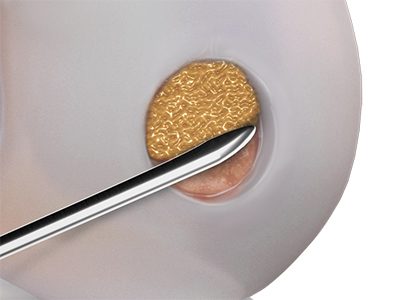
Fine holes are drilled into the bone with a type of awl. The concept is the same as the Pridie technique: the sclerosed bone is pierced, stimulating the blood vessels at the area. The ensuing influx of mesenchymal stem cells stimulates the formation of new cartilage. Research shows a very encouraging success rate for this technique - as high as 80%.
The advantage over Pridie drilling is that microfractures are created using a special awl, whereas the high speed of the drill used in the Pridie procedure can generate considerable heat, burning the bone and blood vessels. With microfracturing, no heat damage is incurred.
Dr. Gäbler achieves excellent outcomes using the microfracture technique; often, cartilage damage is no longer noticeable after just a few months. For this reason, Dr. Gäbler prefers this method of treating relatively minor cartilage damage, rather than a cartilage cell transplant (which is much more complex).

Find out more about knee injuries in sports in this Kurier interview with Dr. Gäbler (available in German only).

Dr. Gäbler often sees patients with a history of arthroscopy that included cartilage smoothing, or cartilage debridement. In almost all cases, patients felt worse after cartilage smoothing than before.
Scientific studies now clearly show that cartilage debridement (especially in older patients) not only fails to lead to improvement, but often even causes symptoms to worsen.
Some Austrian and German medical associations still recommend cartilage smoothing, but Dr. Gäbler considers the method to be a medical failure and advises his patients against the procedure.
A clear exception is in cases requiring the removal of cartilage scales, which could otherwise loosen and detach, causing pieces to freely float around the joint.
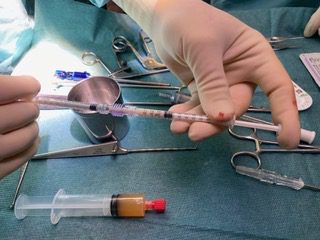
ACP (autologous conditioned plasma) is an autologous blood product. Blood is taken from a vein in the patient’s arm and centrifuged using a specialized technique. This activates the platelets, which in turn release proliferative substances (such as platelet-derived growth factor (PDGF) and morphogenic proteins (transforming growth factor, TGF), which are key to stimulating muscle, tendon, cartilage, and bone healing.
Cingal gel contains cross-linked, stable hyaluronic acid, which has been extensively studied. Hyaluronan, or sodium hyaluronate, is a sugar-like molecule also called a polysaccharide. The molecular structure of hyaluronan, an important component of synovial fluid, is a long chain made up of many identical links. Hyaluronic acid is created by cells in the synovial membrane and released into the joint cavity, where it helps lubricate the surface of the cartilage. The length of the hyaluronan chains affects the lubricating properties (viscoelasticity) of the corresponding medications.
Localized side effects such as pain, heat, redness, and swelling may accompany treatment of the joint. This is a very common side effect of cross-linked hyaluronic acid and, although such reactions are unpleasant, the knee generally calms down within just a few days. In rare cases, hypersensitivity has been observed.
It is not known precisely how hyaluronic acid works, but research has shown that arthritic joints have significantly lower concentrations of hyaluronic acid than healthy joints. Injecting hyaluronic acid into the affected knee joint increases its lubrication. Hyaluron also has an anti-inflammatory effect.
Broad studies have shown that cross-linked hyaluronic acid infiltrations are more effective than injections of simple hyaluronic acid. Additionally, simple hyaluronic acid has the disadvantage of requiring 3-5 injections into the knee, usually one a week, while a single shot of cross-linked hyaluronic acid is often effective for several months.
The gel implantation of cross-linked hyaluronic acid improves natural joint function, extending the joint’s longevity by restoring the mechanical function of the natural synovial fluid (viscoelasticity). In addition, Cingal reduces certain enzymes that cause cartilage deterioration, thus slowing the process. The high stability of Cingal gel means that a single treatment is often effective for 6-9 months.